Nothing Changed. Everything Grew.
A mentee asked me a question recently:
Given everything you’ve watched me traverse, what advice would you give me based on where I am now?
And my immediate thought was:
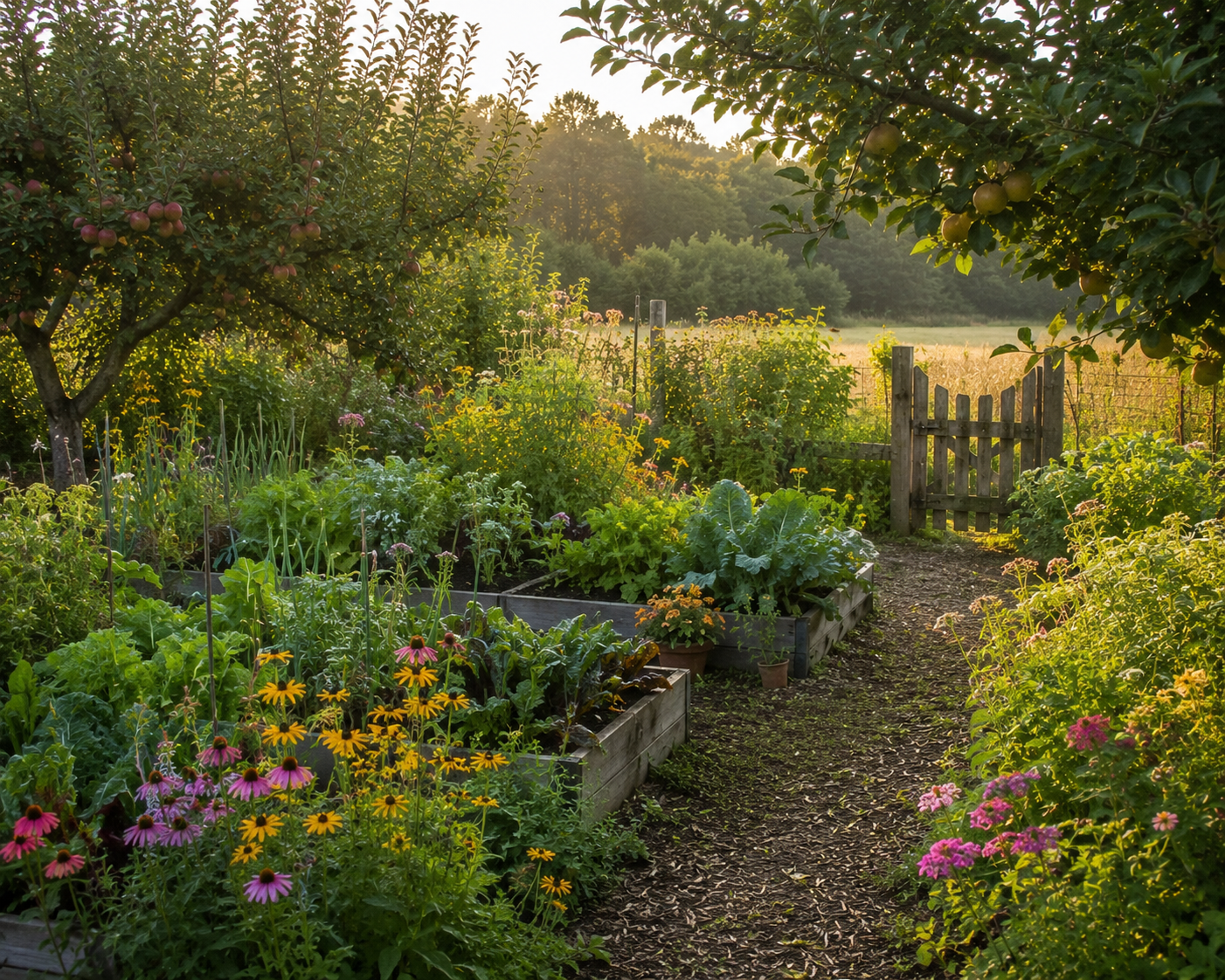
Come to my garden with me.
I started seriously gardening about three years ago.
I built the raised beds. I built the soil the way I was taught to. I learned what I could, got ridiculously excited, bought seeds, and then did what so many of us do when we discover something new that we love.
I planted entirely too fucking much.
At the time, this did not feel like a problem.
It felt like enthusiasm.
Look at all these possibilities.
Tomatoes. Herbs. Flowers. Greens. Roots. Things I had never grown before but suddenly felt deeply committed to seeing emerge from the dirt.
More seeds meant more plants.
More plants meant more food.
More food meant I was obviously doing this gardening thing correctly.
Except that isn’t exactly how it works.
When you cram too much into the same space, eventually everything starts competing for what it needs.
Light.
Water.
Nutrients.
Room.
The garden becomes harder to tend because there is simply too much happening in too little space.
And instead of walking outside and enjoying what is growing, you start spending a lot of your time asking:
- What the hell is wrong with this?
- Why is that struggling?
- Why isn’t this producing?
- Should I move that?
- Do I need to add something?
- Do I need to take something away?
- Is this dying?
- Am I doing this wrong?
What the hell is wrong with this?
Why is that struggling?
Why isn’t this producing?
Should I move that?
Do I need to add something?
Do I need to take something away?
Is this dying?
Am I doing this wrong?
Gardening becomes a lot more how do I fix this?
And a lot less look at what is growing.
Business owners do the same shit.
We start the business.
Build the website we probably did not need yet.
Create the offers.
Then create more offers.
A macro offer.
A mini offer.
A membership.
A course.
A VIP day.
A workshop.
Something low-ticket because someone told us we need an entry point.
Something high-ticket because someone else told us we need premium positioning.
Then we start showing up everywhere.
Networking.
Posting.
Emailing.
Collaborating.
Taking calls.
Meeting people.
Saying yes.
Trying shit.
Planting seeds everywhere we can reach.
And I actually don’t think that season is inherently wrong.
Sometimes you need it.
You do not always know what belongs in your business until you have tried enough things to find out.
You do not always know which relationships will matter, which offers will stick, which ideas have roots, or which parts of the work you actually want to keep doing.
Sometimes you plant too much because you’re learning the bed.
There is information you can only get by doing.
The problem is not the messy planting season.
The problem is refusing to graduate from it.
My mentee spent the last two years planting.
She built the network.
She put herself in the rooms.
She gave her energy to people, opportunities, relationships, ideas, and projects—some aligned, some not—and learned from all of it.
She has already proven that she knows how to move.
She knows how to create momentum.
She knows how to put herself out there.
She knows how to make something from nothing.
She knows how to plant.
She is not in that season anymore.
Now I am watching her pull weeds.
I’m watching her remove things that don’t belong.
I’m watching her become more discerning about where her energy goes.
I’m watching her stop planting something simply because there is an empty patch of dirt.
And that changes the advice.
Because at some point in business, the question stops being:
What else can I plant?
And becomes:
What deserves to keep growing here?
That is a completely different skill.
And I don’t think we talk about it enough.
Most modern business advice is obsessed with planting.
Create more.
Post more.
Sell more.
Network more.
Launch more.
Scale more.
Add another channel.
Build another funnel.
Make another offer.
Stay visible.
Stay relevant.
Stay top of mind.
Keep your foot on the gas.
There is always another fucking verb.
And underneath a lot of that advice is a fear nobody really says out loud:
If I stop moving, will all of this disappear?
If I stop posting so much, will people forget me?
If I stop networking constantly, will the opportunities dry up?
If I stop launching new things, will revenue disappear?
If I stop touching the business every five minutes, will I discover that I was the only thing holding it together?
That fear can keep a founder planting long after the garden is full.
And eventually more stops being growth.
It becomes interference.
That is the part gardening has taught me in a way business never really did.
Sometimes something looks slightly off in the garden and my first instinct is to intervene.
Add something.
Cut something.
Move something.
Fix something.
And over time I have learned that often the most useful thing I can do is watch.
Give it a minute.
See what happens.
Not every yellow leaf is the beginning of a catastrophe.
Not every slow week means something is failing.
Not every problem needs to be solved the second it presents itself.
Sometimes things need time to reveal what they actually are.
Sometimes they clear.
Sometimes they adapt.
Sometimes you realize that what you thought was a problem was simply a phase.
And sometimes, yes, you need to step in.
That is what stewardship actually requires.
Attention without constant interference.
There is a difference between neglecting something and giving it enough room to show you what it needs.
That difference matters in business too.
Because founders are very good at calling anxiety strategy.
Something feels quiet, so we change the offer.
Sales slow down for a week, so we rewrite everything.
Engagement dips, so we decide the entire brand needs a new direction.
We get bored, so we create something new.
We stop seeing visible movement and immediately assume nothing is happening underneath.
So we dig everything up to check the roots.
Then wonder why nothing has had time to establish itself.
I think space is one of the most undervalued inputs in business.
Not “space” in the vague self-care sense.
Actual space.
Space for an offer to mature.
Space for people to find the thing you already made.
Space for a message to become associated with you because you repeated it long enough instead of replacing it every three weeks.
Space for a relationship to deepen without immediately asking what it can produce.
Space to see what is working when you aren’t constantly throwing something new into the ecosystem.
Space reveals things motion hides.
And I think that scares the shit out of people.
Because movement gives us something to measure.
We can point to it.
Look, I’m doing something.
Look, I’m growing.
Look, here’s the new offer.
The new launch.
The new website.
The new strategy.
The new thing.
Stillness is harder.
Stability is harder.
There is almost no applause for saying:
Nothing has changed.
Same offers.
Same message.
Same business.
Same core strategy.
Same garden.
But the roots are deeper.
The relationships are stronger.
The systems are cleaner.
The clients understand what we do faster.
The work takes less effort to deliver.
The founder is no longer white-knuckling the whole thing into existence.
Nothing changed.
Everything grew.
There is a flex in that.
A big one.
I think there is also a romance in the mundane that entrepreneurship has done a terrible job of teaching us to appreciate.
Because mature things are often repetitive.
You water.
You tend.
You pay attention.
You pull the weed that needs pulling.
You leave the plant that does not need your help alone.
You come back tomorrow.
There isn’t always some massive breakthrough.
Sometimes the win is that the thing you built keeps working.
Sometimes the most impressive thing about a business is that nobody reinvented it this quarter.
Sometimes growth looks less like expansion and more like everything finally having enough room to breathe.
And this is why my advice to her now is not to push harder.
She has already done that.
It is not to meet more people.
She has already built the network.
It is not to prove she can carry more.
She has already proven that too.
Her job now is different.
She gets to become the conscious gardener of the soil she has built and the seeds she has already planted.
She gets to decide what stays.
She gets to pull what is taking resources without giving enough back.
She gets to notice where there is overcrowding.
She gets to pay attention to what is thriving.
She gets to be more careful about what she introduces into the ecosystem now because she understands that every new thing changes the whole bed.
And then?
She gets to step back.
Not forever.
Not because the work is done.
Not because businesses run themselves and gardens never need tending.
But because there comes a point when constantly reaching for the soil is not devotion.
It is distrust.
You have to trust that some of what you built knows how to grow without your hand on it every second.
You have to trust that taking your foot off the gas does not automatically mean the car is going to roll backward.
You have to trust that the absence of frantic movement is not the same thing as stagnation.
And maybe most importantly, you have to become willing to enjoy what all that planting was for.
The harvest was never supposed to become another responsibility you were too busy to notice.
Maybe the work now is not to plant more.
Maybe it is to stand still long enough to notice what has been growing while you were busy looking for the next thing to do.
P.S. If you’re in the season where the answer might not be “do more,” subscribe.
I’m writing about business, identity, astrology, health, and what changes when you stop confusing constant movement with growth.
Sometimes the next move is building.
Sometimes it’s pruning.
Sometimes it’s leaving the damn garden alone.
